
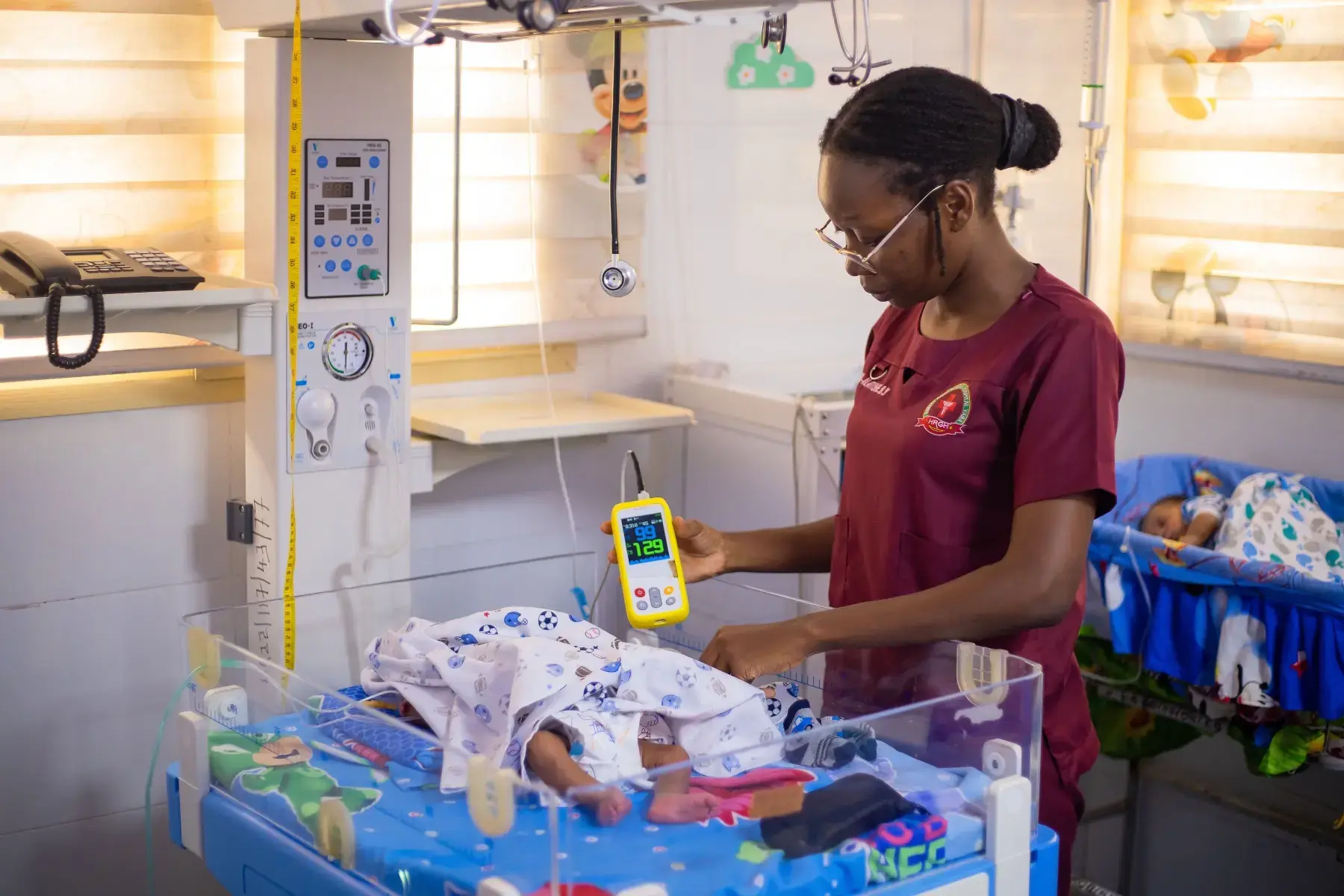
The challenge: equipment alone is not enough
Installing equipment is only one part of oxygen care. The people using it need to understand its role, recognise problems, and know how to apply their learning in patient-care settings.
HealthPort’s clinical training addresses the gap between having oxygen equipment and being confident using it. Sessions cover practical topics including oxygen therapy and pulse oximetry.
The response: practical training and structured assessment
HealthPort has trained 232 nurses across partner hospitals so far in 2026, with the programme continuing through the year.
Each session includes a pre-test to establish existing knowledge and a post-test to assess learning. Across its sessions, HealthPort has observed stronger performance after training.
- Practical sessions based on nurses’ day-to-day work.
- Pre-tests and post-tests to track changes in knowledge.
- Continued clinical support after the session.
What continues: learning within the hospital
The Respiratory Nurse peer-led programme equips nurses to support and train their colleagues. This gives facilities an internal resource for reinforcing good oxygen practice beyond an individual training visit.
The programme’s aim is lasting knowledge and greater confidence at the point of care. Structured assessment and continued clinical support help reinforce learning beyond the training room.
Next story
Support that continues after delivery.